
- Home
- Industries
- SMEs & Operations Teams
Business Process Automation for Singapore SMEs.
Smaller teams often rely on a combination of email, spreadsheets, messaging apps and line-of-business software. That can work at first, but repeated copying and follow-up become harder to manage as enquiries and transactions increase.

Where technology can help
Good first projects for a small team.
How to choose
Pick the one that passes all three.
Not because it looks impressive in a demo.

A typical project
Spreadsheets everywhere.
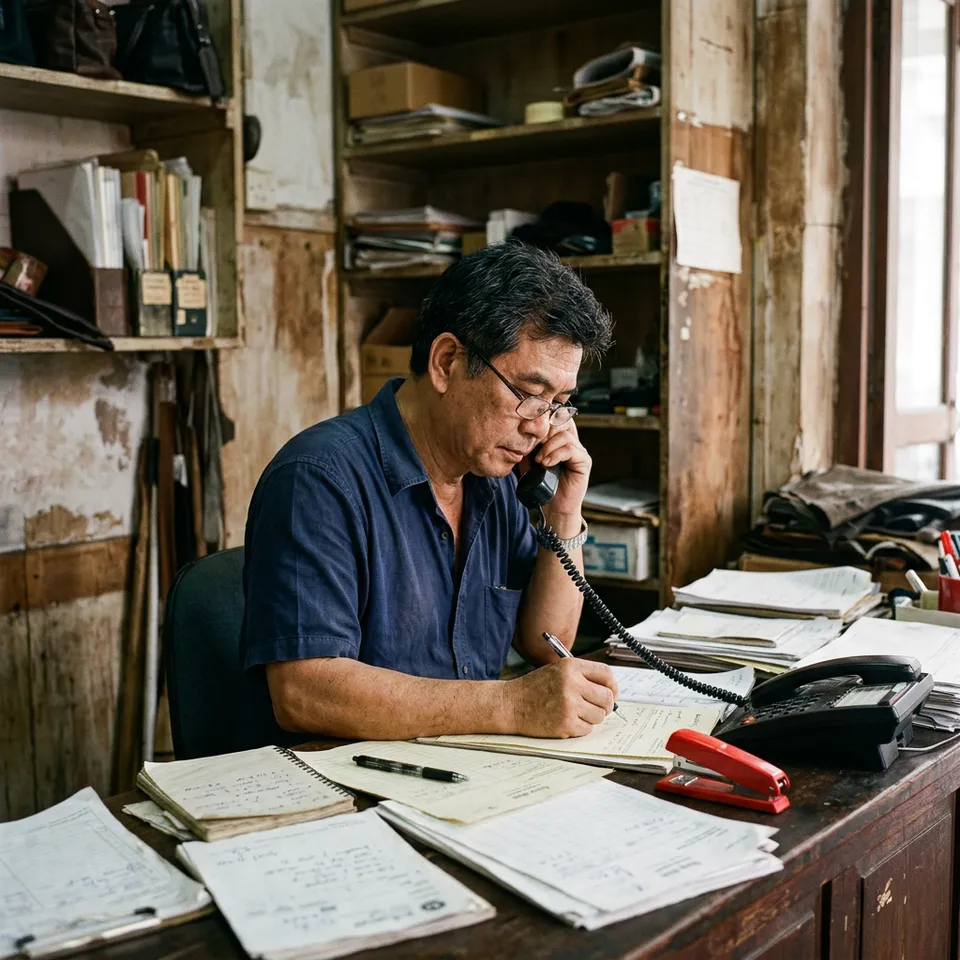
Jason keeps a small business running from a dozen spreadsheets, and every one needs updating by hand.
- Today
Orders, invoices and stock live in separate files. One missed update and the numbers disagree.
- First step
We pick one process that passes all three tests and connect the tools it touches.
- After
Each update is entered once and reaches every file that needs it. Jason checks the exceptions.
Jason is an illustrated character. This shows a typical project, not a client case study.
How to approach a project
Agree the awkward cases before building.
Before building, agree what should happen for incomplete data, duplicate requests, timeouts, rejected approvals and other exceptions. Keep access limited, document the workflow and make sure someone owns the system after launch.
- Incomplete data
- Duplicate requests
- Timeouts
- Rejected approvals
- Other exceptions
- Someone owns the system after launch
Services that often apply.
The technology depends on the process. These are the usual starting points.
How a project runs
From first call to handover.
Each stage ends with something you can review before the next one starts.
 01
Understand the process
 02
Design the solution
 03
Build and test
 04
Deploy and hand over
- 01
Understand the process
Map the task, the people involved, the information moving through it and the points where work gets stuck.
- A working session with the people who do the task
- A walk through the systems, files and approvals involved
- Notes on volumes, exceptions and where time is lost
- 02
Design the solution
Agree the scope, systems, access, approvals, data handling, success measures and what happens when something goes wrong.
- Pick the approach: automation, integration, a custom build or nothing new
- Confirm access, data handling and who approves what
- Set the measures that will show it worked
- 03
Build and test
Develop the workflow, application or integration, then test real scenarios, exceptions and failure paths before go-live.
- Build in short steps you can see and comment on
- Test with real cases, including the awkward ones
- Check alerts, permissions and failure paths before go-live
- 04
Deploy and hand over
Document the system, clarify ownership and agree the maintenance and support model.
- Go live with a plan to roll back if needed
- Walk the people who use and own it through how it works
- Agree who maintains it and how support works
How it runs
Built to run, with people in charge.
One process, end to end
Every step and hand-off sits in one workflow you can see, from the first request to the final record.
Exceptions go to a person
Anything unusual or uncertain is sent to the right person with the details attached, instead of being dropped.
Handed over, then supported
You get written documentation, a named owner on your side and an agreed support plan, including how to switch it off.
Discuss a project.
Tell us about the process, the systems involved and the outcome you need.
What happens next
- 1You send a few linesThe process, the systems involved and the outcome you need.
- 2We reply by emailTo confirm a meeting time in Singapore hours.
- 3A 30-minute callWe walk through the work together and say plainly whether we can help.