
The real question behind build versus buy
The choice is rarely about technology. It is about how much of your process is standard and how much is particular to you. Payroll, email and basic accounting work much the same in most companies, so a good product will usually beat anything you build. The way you price a complex job, assess a client or schedule specialised staff may be exactly what customers pay you for, and bending it to fit a generic tool can cost more than it saves.
UK government guidance on choosing technology puts it well: the most important thing is to make choices that let you change your mind later, adapt as your understanding of user needs changes, and manage security risk sensibly. It also advises keeping total cost of ownership down, avoiding lock-in to long contracts, and always keeping full control of the data you store. Those principles apply to a Singapore SME as much as to a government department.
When off-the-shelf software makes sense
- The process is common across your industry and you are happy to follow the product’s way of working.
- The product covers most of your needs out of the box, with the rest handled by settings rather than workarounds.
- You want something running in weeks, not months.
- You do not have, or want, a team to maintain software.
- The vendor has a clear record of updates, support and a way to export your data.
Remember that SaaS does not remove your security responsibilities. Singapore’s Cyber Security Agency describes a shared responsibility model for cloud services: securing the environment is a joint task between the customer and the provider. With SaaS, you are still responsible for things like who has access, how accounts are set up and how your data is used.
When custom software makes sense
- The process is a genuine source of advantage and a generic product would flatten it.
- You have tried products and keep running into the same gaps, filled by spreadsheets and manual steps.
- You need to combine data from several systems in a way no product supports.
- Per-user licence fees will grow faster than the cost of owning the software.
- You need specific control over where data lives, how it is processed or how decisions are logged.
Custom software is not a one-off cost. Budget for hosting, security updates, bug fixes and small improvements every year. A system nobody maintains becomes a risk.
The middle path most businesses take
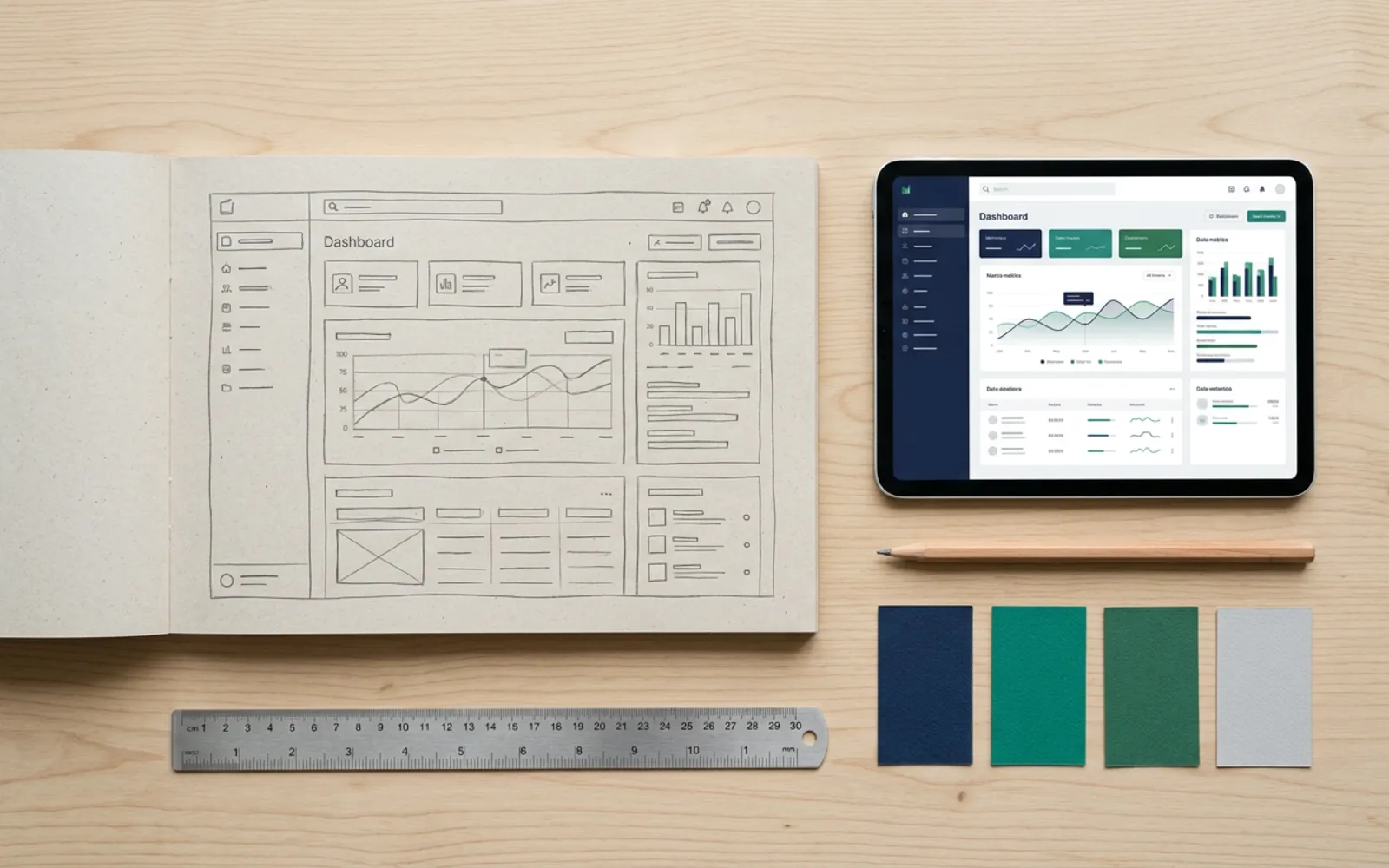
It is seldom all or nothing. A common pattern is to buy solid products for standard functions such as accounting, HR and CRM, then build a thin custom layer on top: an integration that keeps them in sync, a client portal, a pricing engine or a reporting dashboard. This keeps most of your stack on supported products while putting your own effort where it matters.
The GOV.UK guidance suggests mapping your components to see what you need to build and what you can buy or get for free, and using open standards for the interfaces between parts so changes are easier later. The same idea works for a small business: draw your main systems, mark which are standard and which are particular to you, and focus custom work on the second group.
A scoring checklist
Score each option from 1 to 5 against these criteria, then compare honestly:
- Fit: how much of your process does it cover without workarounds?
- Time to value: how soon will people actually use it?
- Five-year cost: licences or build cost, plus hosting, support, changes and staff time.
- Control of data: can you export everything in a usable format at any time?
- Flexibility: how easily can it change when your process changes?
- Integration: does it have a documented API that fits your other systems?
- Security and compliance: who is responsible for what, and is that written down?
- Exit: what would it take to switch away in three years?
Questions to ask before you sign
For a SaaS vendor:
- How do we export all our data, and in what format?
- Where is our data hosted, and will any of it leave Singapore?
- What are the contract length, renewal terms and price increase terms?
- Which security tasks are ours and which are yours?
For a custom development partner:
- Who owns the source code and the intellectual property when the project ends?
- What documentation and handover will we receive?
- What does ongoing support cost, and what response times are included?
- If you process personal data for us, what contract terms will cover it?
On the last point, PDPC guidance notes that a contractor processing personal data on your behalf is likely to be a data intermediary, and that your organisation remains liable for its acts or omissions that breach the PDPA. PDPC’s sample data protection clauses are a useful starting point for either kind of contract.
A sensible next step
List the three tasks your team spends the most time working around in your current software. For each one, check whether an existing product handles it well, whether a small integration would fix it, or whether it is truly particular to your business. That short list usually points clearly to buy, build or a mix. If it would help, we can go through it with you and give a straight view, including when buying is the better answer.
Related service: Custom Software Development
Comments
No comments yet. Questions about the guide are welcome.